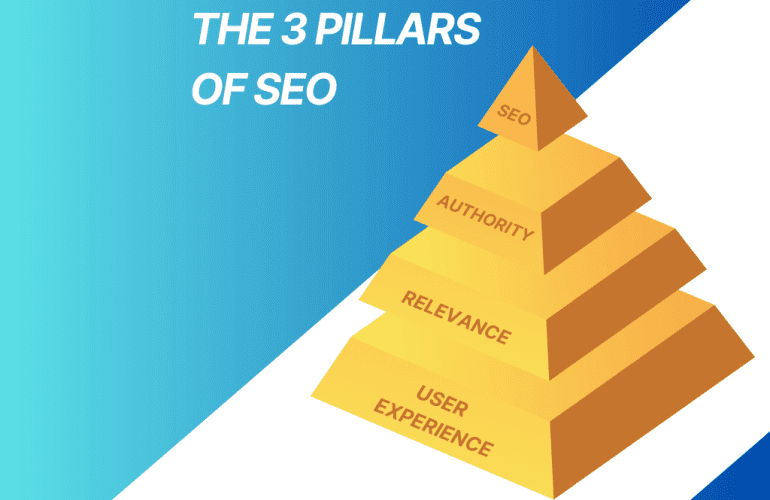
To improve your website’s search ranking you need to work on four blocks at once: content that answers better than your competitors’, technical SEO (speed, crawling and indexing), user experience, and authority through links. The first changes show up within 2 to 3 months; solid results, within 6 to 12.
Improving your SEO ranking is not about applying isolated tricks: it is about closing the gap between what your page offers today and what Google considers the best possible result for a specific search. That gap can be measured, prioritised and closed piece by piece.
Here is an example of how concrete this gets: Google publishes exact thresholds for Core Web Vitals, the page experience metrics that form part of its evaluation. According to the official web.dev documentation, a page is considered good when its LCP is 2.5 seconds or less, its INP is 200 milliseconds or less and its CLS is 0.1 or less, measured at the 75th percentile of real visits. These are not opinions: they are figures you can check on your own website today.
Below are the seven fronts that actually move rankings, ordered by the impact they tend to have on freelancer and small business websites.
The 7 factors that improve search rankings
- Content that answers better than the competition
- Search intent and keyword selection
- Technical SEO: crawling, indexing and speed
- User experience and behaviour signals
- Authority and quality inbound links
- Local SEO, if your business serves a specific area
- Ongoing maintenance and updates
1. Content that answers better than the competition
The useful question is not “is my content good?” but “is it better than the ten results already ahead of me?”. Open the search you want to win, read what is in the top 10 and find what is missing: an updated figure, a real example, a pricing table, a step everyone takes for granted.
Three rules that work consistently:
- Answer within the first 60 words. If someone reads only the first paragraph, they should leave with the answer.
- Replace the generic with the specific. “Many companies” adds nothing; “40% of our clients” or a sourced figure does.
- Scannable structure. Descriptive headings, lists and at least one table in long articles. This is what Google pulls for featured snippets and what AI engines cite.
2. Search intent and keywords
The most expensive mistake is targeting a keyword without checking what the searcher expects to find. If someone searches for “web maintenance price” and your page offers a theoretical article instead of a pricing table, it will not rank no matter how well written it is.
For a small business, long tail keywords are the realistic route: lower volume, far less competition and much clearer intent. Before writing, check the real intent by opening the search and seeing which type of page Google rewards.
One non-negotiable rule: a single main keyword per page. Two pages targeting the same term compete with each other and neither wins.
3. Technical SEO: crawling, indexing and speed
If Google cannot crawl or index a page, none of the rest of the work exists. Always start here:
- Coverage in Search Console. Check which pages are indexed and which were excluded, and why.
- Core Web Vitals. The three thresholds above. In WordPress, the usual causes of a high LCP are uncompressed images, too many plugins and an overloaded shared hosting plan.
- Mobile first. Google indexes the mobile version. If content is missing on mobile but present on desktop, that content does not count.
- Canonical tags and redirects. Duplicate content and redirect chains dilute the signal.
- Structured data. Correct schema helps search engines understand what each page is about.
Much of this overlaps with On-Page SEO, where you will find the detail on titles, metadata and internal structure.
4. User experience and behaviour signals
Google does not measure “time on page” directly as a ranking factor, but it does evaluate page experience, and user behaviour gives the problems away: if someone lands, does not find what they were looking for and returns to the results, the pattern repeats and the position eventually slips.
What has the most impact on small websites: navigation that reaches any relevant page in under three clicks, short forms, text that is readable on mobile without zooming, and a call to action visible without scrolling. If you sell online, optimising your online store design covers this with concrete cases.
5. Authority and quality inbound links
One link from a relevant website in your sector is worth more than fifty links from indiscriminate directories. Domain authority is not an official Google metric, but it works as a guide to where you stand against your competitors.
Realistic routes for a freelancer or small business: collaborations and guest articles in industry media, professional associations and chambers of commerce, suppliers and clients mentioning you on their sites, and content with original data that others want to cite. All of this is part of Off-Page SEO.
What does not work: buying link packages. It is the fastest route to a penalty, and recovering from one costs more than all the work you would have saved.
6. Local SEO, if your business serves an area
If you serve clients in a specific city or region, local SEO usually delivers results faster than national SEO, because you compete against far fewer websites. The three pillars: a complete and active Google Business Profile, a NAP (name, address and phone) that is identical everywhere, and real reviews arriving consistently.
7. Ongoing maintenance and updates
SEO is not a project that ends. Competitors publish, Google changes and content ages. Reviewing and updating an article that already has traction almost always pays off more than publishing a new one from scratch.
Then there is the technical side: a website that is not kept up to date accumulates vulnerabilities and loses speed. We cover this in why WordPress maintenance matters.
What to prioritise depending on your situation
| Your situation | Start with | Indicative timeframe |
|---|---|---|
| New website, no traffic | Technical SEO + service pages with commercial intent | 6-12 months |
| Plenty of impressions, no clicks | Rewrite titles and meta descriptions + direct answer up top | 1-2 months |
| Content sitting in positions 20-50 | Expand and update what already has traction + internal linking | 2-3 months |
| Business serving a local area | Local SEO: Google Business Profile, NAP and reviews | 2-4 months |
| Good rankings, few conversions | UX and CRO: forms, CTAs and speed | Immediate |
How long it takes to see results
Technical fixes and title changes can show up within weeks, as soon as Google recrawls the page. Real ranking changes arrive from month 2 or 3 onwards. And building authority for competitive terms is a matter of 6 to 12 months of sustained work.
Anyone promising you the top position in a month is selling something else.
Checklist to improve your website’s ranking
- A single main keyword per page, with no overlap.
- A direct 40-60 word answer at the top of every page.
- A 55-58 character title and a unique meta description on every URL.
- Core Web Vitals in the green: LCP ≤ 2.5 s, INP ≤ 200 ms, CLS ≤ 0.1.
- Zero indexing errors in Search Console.
- Between 3 and 7 internal links per article, with descriptive anchor text.
- A complete Google Business Profile if you serve local clients.
- A quarterly review of the content with the most impressions and the fewest clicks.
Tools to measure and work on your ranking
The two essential ones are free: Google Search Console (which searches bring you impressions and where you rank) and Google Analytics 4 (what people do once they arrive). Those two alone are enough to start making decisions. After that, if you need competitor analysis and search volumes, these paid tools have usable free features:
- Ahrefs — link and competitor analysis.
- Ubersuggest — keyword research, the most affordable option.
- Semrush — full organic visibility suite.
- Moz — domain authority and local SEO.
And one new front worth paying attention to: more and more people ask ChatGPT, Perplexity or Gemini directly instead of searching on Google. Appearing there requires specific work, which is what we cover in SEO for AI and answer engines (AEO).
Here is a complementary video on SEO ranking factors:
Want to know what is holding your rankings back?
I analyse your website, identify the real opportunities and deliver a prioritised 6-month plan. Specialised in freelancers and small businesses.
Frequently asked questions about improving SEO rankings
How long does it take to improve a website’s SEO ranking?
The first ranking changes appear 2 to 3 months after the improvements are applied. Technical fixes and title changes can show up within weeks, but consolidating positions for competitive keywords takes 6 to 12 months of sustained work.
What is the first thing I should do to improve my rankings?
Connect Google Search Console and review which searches already bring you impressions. It is the fastest way to find pages that get visibility but no clicks: rewriting the title, the meta description and the first paragraph is usually enough to start capturing traffic.
How many ranking factors does Google have?
Google has never published a closed list of ranking factors. Hundreds of signals are involved, but in practice, for a freelancer or small business website, the weight concentrates in four blocks: content relevance, technical SEO, user experience and authority through links.
Can I improve my website’s ranking without hiring anyone?
Yes, much of the basic work is manageable: reviewing titles, writing useful content, fixing indexing errors and optimising speed. What usually needs outside help is the initial diagnosis, the keyword strategy and the technical WordPress fixes.
Is SEO still worth it if my clients find me through ChatGPT?
Yes, and increasingly so. AI engines rely on indexed web content to build their answers, so a well-ranked website is more likely to be cited. There are also specific optimisations (AEO) that increase that likelihood.

WordPress Expert, SEO & UX Optimization | I help freelancers and SMEs grow their business. | Web Design and Development Specialist for Startups, SMEs, and Personal Projects.