
Quick answer
Long tail keywords are search phrases of three or more words targeting specific niches (for example, “web design for freelancers in Barcelona” instead of “web design”). They have less competition, higher conversion rate and match voice search and AI answer engines better. They’re the foundation of SEO for businesses that want to capture qualified traffic without a large budget.
In the SEO world, long tail keywords are one of the most valuable yet often underrated concepts. While generic keywords often attract more people, longer, more specific keywords make the difference when it comes to conversion and qualified traffic. In this article we explain what long tail keywords are, how to use them in your SEO strategy and some practical examples so you can apply them in your web design and digital marketing projects.
What are Long Tail Keywords?
Long tail keywords are longer, more detailed search phrases that generally contain three or more words. Unlike shorter, broader keywords (for example, “SEO” or “web design”), long tail keywords focus on more specific niches. These keywords are typically used by users who have a clear search intent and are closer to making a decision, such as purchasing a product or hiring a service.
For example, if you own a web design agency, a generic keyword like “web design” may attract a lot of traffic, but the competition will be very high and many of those visitors may not be potential customers. On the other hand, a long tail keyword like “web design for small businesses in Barcelona” will help you attract users who already know what they are looking for and have a more specific need, which increases the likelihood of conversion.
Long tail vs. short tail: key differences
Before diving into the advantages, this table summarizes the essential differences between the two types of keywords. It’s the foundation for understanding why an SMB or freelancer should prioritize long tail:
Advantages of Using Long Tail Keywords in Your SEO Strategy
Long tail keywords offer several significant advantages to any SEO strategy. Some of the most notable include:
- Less competition: short keywords tend to have fierce competition, as many companies try to rank for them. On the other hand, long tail keywords tend to have less competition because they are more specific, which gives you more opportunities to appear in the first search results.
- Better audience segmentation: people who use long tail keywords tend to have a clearer and more specific intention. This means that you will not only attract more visitors, but you will attract those who are more interested in your products or services, increasing the chances of conversion.
- Higher conversion rate: long tail keywords attract users who are more advanced in their purchasing process, which increases the chances of conversion. This translates into a higher conversion rate, as they are not looking for general information, but rather a specific solution to their needs.
- Optimizing for voice search and AI engines: with the growth of voice searches through devices such as Google Home or Amazon Alexa, and with the rise of answer engines like ChatGPT or Perplexity, user queries have become more conversational. Long tail keywords match the natural way we ask questions and the answers these engines generate.
How to Find Effective Long Tail Keywords
To get started with long tail keywords, it’s essential to know how to find them and evaluate which ones are most relevant to your industry. Here are three complementary methods:
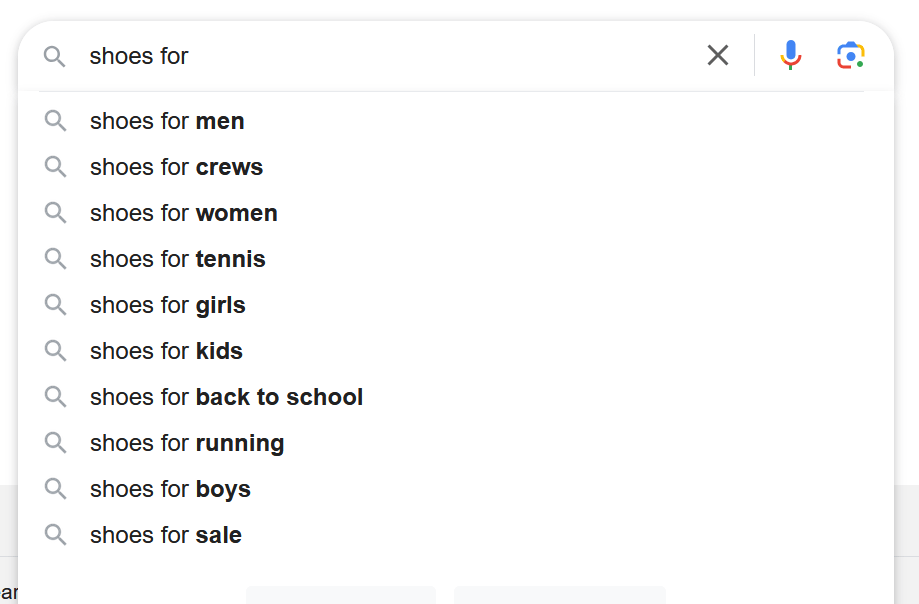
- Google Autocomplete: an easy way to identify long tail keywords is to use the Google search bar. As you begin typing a term, Google will show you suggestions based on what other users have previously searched for. These suggestions are a great source of inspiration for finding long phrases that could attract qualified traffic.

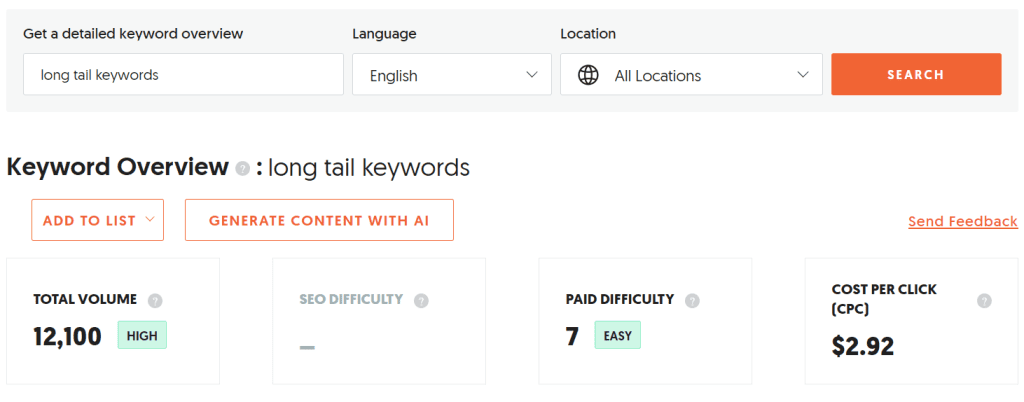
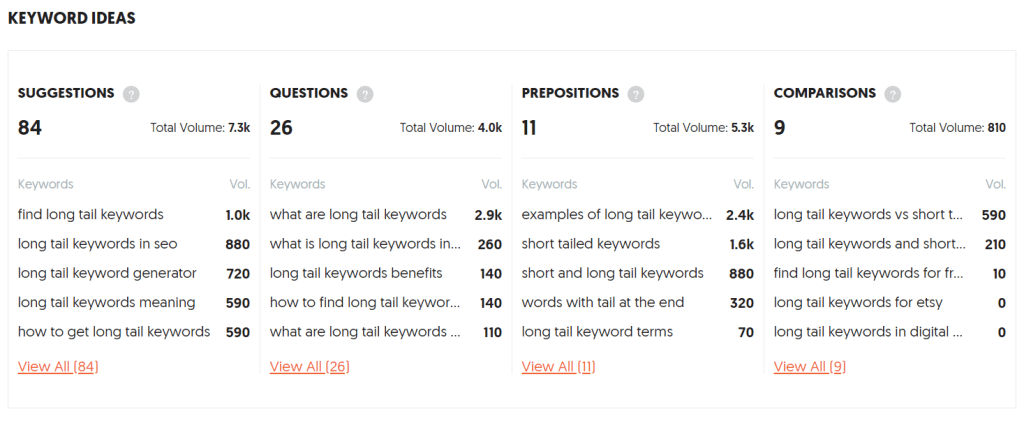
- SEO Tools: there are specialized tools like Ubersuggest, Ahrefs and SEMrush that allow you to perform keyword research and discover long tail keywords with a good balance between search volume and competition. These tools will also show you metrics for each keyword, such as difficulty level and estimated traffic.
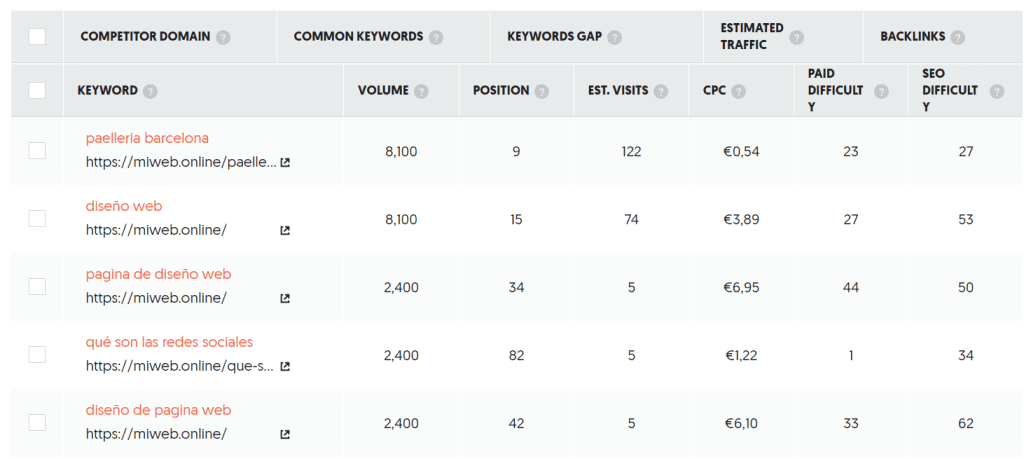
- Competitor Analysis: another effective way to identify long tail keywords is to research what terms your competitors are using. Analyzing the top-ranking content can give you insights into which specific keywords are working in your industry.
Practical Examples
Let’s look at three concrete examples of how to use long tail keywords in different sectors:
- Web design sector: instead of trying to rank for the keyword “web design”, you could go for “responsive web design in Barcelona”. This will help you target a more specific audience that is looking for local and specialized solutions.
- Clothing e-commerce: if you have an online clothing store, instead of using “buy clothes online”, you could focus on “buy sustainable clothing for women”. This way, you’ll attract an audience that’s interested in specific products and is more likely to convert.
- Digital marketing: if you offer SEO services, instead of focusing only on “SEO services”, you could opt for “how to improve SEO for online beauty product stores”. This allows you to attract companies that are looking for solutions tailored to their niche.
How to Integrate Long Tail Keywords into Your Content Strategy
Now that you understand the importance of long tail keywords, it’s time to learn how to effectively integrate them into your content:
- Create targeted and useful content: make sure the content you create is aligned with the user’s intent. For example, if you’re trying to rank for “how to optimize images in WordPress for better SEO”, your article should offer a step-by-step guide with recommendations for plugins, tools and best practices.
- Optimize key elements: include long tail keywords in essential elements of your page like the title, headings (H1, H2), meta description, and in the first paragraph of your text. This way, search engines can easily understand what your content is about.
- Use natural variations: while it’s important to use exact long tail keywords, you can also include variations to make your text flow naturally. Search engines can interpret synonyms and grammatical variations.
- Update your content regularly: SEO is dynamic, so it’s important to review and update your content regularly. As new long tail keywords emerge or search trends change, you’ll be able to adapt and stay relevant.
Conclusion
Not only are long tail keywords an effective way to reduce competition in search engines, but they also help attract more qualified traffic and increase conversions. By including longer, more specific phrases in your SEO strategy, you’ll be better positioned to attract users with clear intent, improve user experience and, ultimately, optimize your online business results.
If you run a blog or an online store, don’t underestimate the power of long tail keywords. Integrate these strategies into your content and you’ll improve your visibility in search engines while attracting a more interested and willing-to-convert audience.
If you have questions, I’ll help you. Contact me.
Frequently asked questions about long tail keywords
What are long tail keywords?
Long tail keywords are long, specific search phrases of three or more words, such as “web design for freelancers in Barcelona” instead of “web design”. They have less search volume but much less competition and a much higher conversion rate, because they catch users with clear intent close to purchase.
What is the difference between long tail and short tail keywords?
Short tail keywords are generic one or two-word terms with high volume and high competition (“SEO”, “web design”). Long tail keywords are three-or-more-word phrases with lower individual volume but very high search intent. Combined, long tail keywords account for most organic traffic on most websites.
How many words does a long tail keyword have?
A long tail keyword has three or more words. Most are between three and six words. The name comes not from the exact word count but from the “long tail” of the search distribution: there are few very-searched keywords (head) and many rarely-searched keywords (long tail) that together add up to more traffic than the generic ones.
How to find long tail keywords for free?
The most useful free methods are: (1) Google Autocomplete as you start typing in the search bar, (2) “People also ask” questions on the SERP, (3) related searches at the bottom of the SERP, and (4) the free version of Ubersuggest or AnswerThePublic. For real volume and difficulty, tools like Ahrefs or SEMrush require a subscription.
Why are long tail keywords better for small businesses and freelancers?
Because a small business or freelancer cannot compete for generic keywords dominated by national or international brands. Long tail keywords have low SEO difficulty and allow ranking in 3-6 months without a big link budget. They also capture users searching for exactly what the business offers, with a better conversion ratio.

WordPress Expert, SEO & UX Optimization | I help freelancers and SMEs grow their business. | Web Design and Development Specialist for Startups, SMEs, and Personal Projects.