
Domain Authority (Domain Rating, or DR) is an Ahrefs metric, from 0 to 100, that measures a domain’s strength based on its backlinks. Raising it comes down to quality inbound links, well-optimized content, and a good user experience. Don’t obsess over the number itself: an Ahrefs analysis of hundreds of domains found that DR has only a 0.131 correlation with search rankings — a weak relationship. It’s not a direct Google ranking factor, but an indicator of how strong your link profile is. For freelancers and small businesses, the priority isn’t chasing a number — it’s earning real links from sites that matter in your industry.
A website’s Domain Authority, also known as Domain Rating (DR) or Domain Authority (DA), is a metric that reflects the relevance and popularity of a domain on the Internet. It is a key indicator in the world of SEO that helps search engines determine how trustworthy and authoritative a site is compared to others.
Table of contents
What is Domain Rating (DR)?
Domain Rating is a metric created by Ahrefs, one of the most popular tools for SEO analysis. It measures the strength of a domain based on the quantity and quality of inbound links (backlinks) it has. It is expressed on a scale of 0 to 100, with 0 being a site with little or no authority and 100 being a powerful domain, such as the giants Google or Facebook.
Example:
- Google.com: DR close to 100.
- A new blog: DR between 0 and 10.
How is Domain Rating calculated?
DR calculation is based primarily on backlinks. Here’s a simplified breakdown:
- Quantity of backlinks: a site with many links from other domains gains more authority.
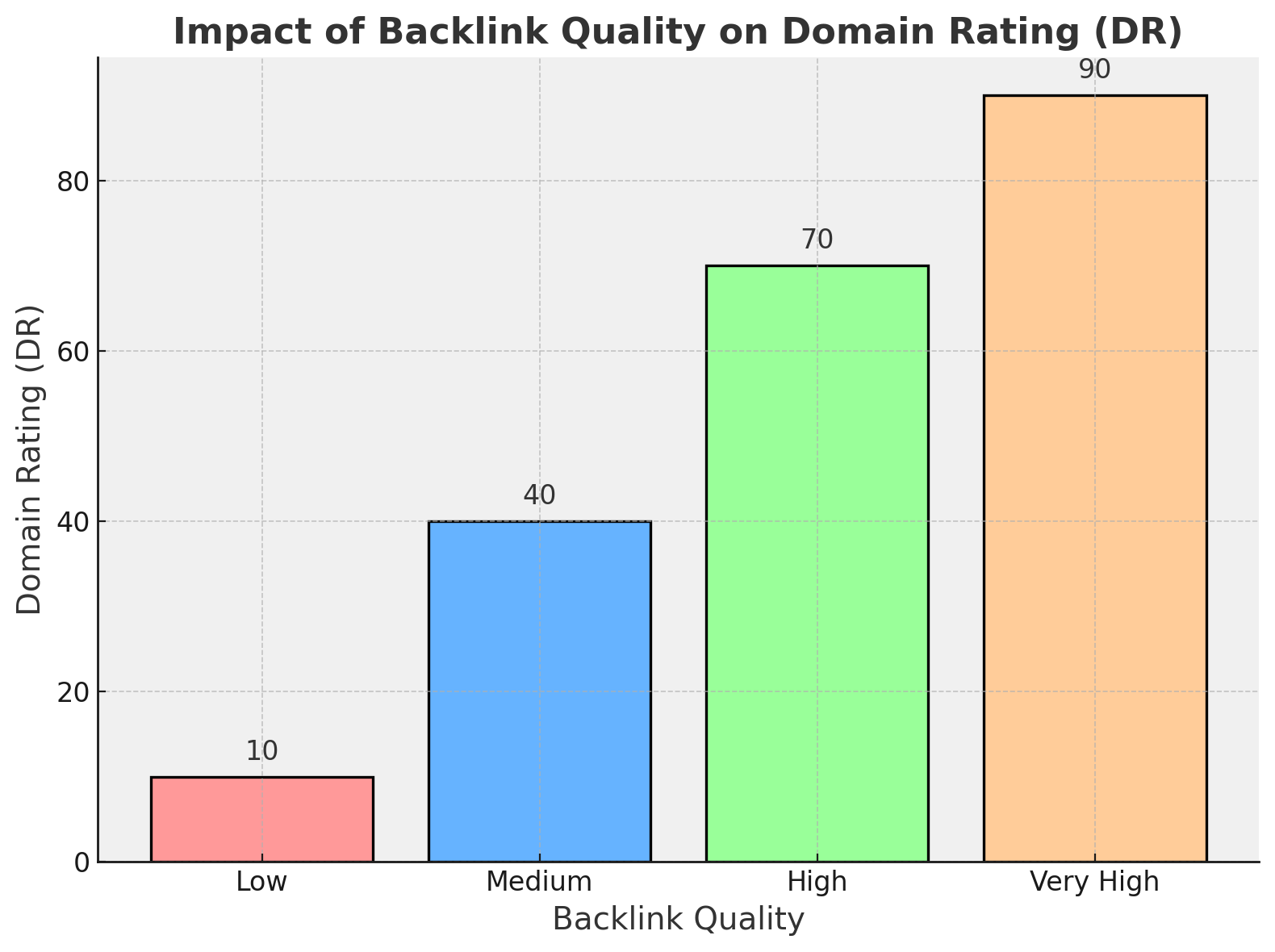
- Quality of backlinks: not all links are of equal value. One link from a high-authority site is much more valuable than dozens of links from low-authority sites.
- Distribution of links: if a site links to only one domain, that link loses value. If an authoritative site links to multiple domains, that value gets spread out, diminishing the impact on each one.
Why is Domain Rating important?
The higher the Domain Rating, the more likely your site is to appear at the top of search results. This translates into more organic traffic and, consequently, more conversions or sales. That said, as explained below, the relationship between DR and Google rankings is a weak correlation, not a guarantee — DR is an indicator of how strong your link profile is, not a lever you pull directly to climb the rankings.
How to increase the Domain Authority of your website
Increasing a website’s Domain Rating is no easy task, but effective strategies exist. Here are some ways to improve this metric:
1. Building quality backlinks
One of the key factors in improving DR is getting inbound links from high-authority sites (Off-page SEO). These links are a signal to search engines that your content is valuable and trustworthy.
- Guest posting: posting articles on other people’s blogs and linking to your site.
- Creating exceptional content: highly shared articles or resources tend to generate natural backlinks.
- Broken link building: detecting broken links on relevant sites and offering your content as an alternative.
2. On-page optimization
The quality of the content on your website also influences its authority. On-page SEO ensures that the content is easy to read for both users and search engines.
- Proper use of keywords: research and use relevant keywords without overloading the text.
- Quality content: offer original, useful, and well-structured information.
- Image optimization: make sure your images have SEO-optimized alt text.
3. Improving user experience
Search engines also take into account how users behave on your site. Factors such as loading speed, mobile-friendliness, and easy navigation are essential to retaining visitors.
- Optimize page speed: use tools like Google PageSpeed Insights to identify issues.
- Responsive design: your site should look good and be functional on all devices.
- Intuitive interface: make navigation easy with clear menus and accessible links.
4. Publishing content regularly
Publishing fresh, relevant content consistently is crucial to attracting visitors and generating more links. Search engines value sites that are frequently updated and offer valuable content.
- Comprehensive guides on topics in your industry.
- Blog posts that solve common problems for your audience.
- Infographics and videos that explain concepts visually.
5. Removing toxic links
Links from low-quality or spammy sites can hurt your DR. Use tools like Google Search Console or SEO analytics tools to identify and disavow these links that negatively affect your authority.
6. Taking advantage of social media
Although links from social media don’t directly count towards your DR, they do help amplify the reach of your content, which can lead to more backlinks. Share your posts regularly and encourage users to share them.
Graphic example of the impact of backlinks on DR:
Difference between Domain Rating and Domain Authority
Although Domain Rating (DR) and Domain Authority (DA) are similar metrics, there are small differences:
Both metrics can help you measure your website’s domain authority, although it’s important not to get hung up on a single number. The key is to build a site with quality content and a solid SEO strategy.
Conclusion
Improving your website’s domain authority or Domain Rating is a process that requires time, effort, and a well-structured SEO strategy. From building quality backlinks to optimizing user experience, every aspect of your site influences its authority. With these tactics, you can position yourself as a reference in your niche and increase the visibility of your website in search engines.
Here’s a video with more information:
Frequently asked questions about Domain Authority (Domain Rating)
What is Domain Rating (DR)?
It’s an Ahrefs metric, on a scale of 0 to 100, that measures a domain’s strength based on the quantity and quality of backlinks it receives.
How is Domain Rating calculated?
It’s based on the quantity, quality, and distribution of the backlinks pointing to your domain: one link from a high-authority site is worth far more than dozens of links from weak sites.
Is Domain Rating a Google ranking factor?
Not directly. An Ahrefs analysis of hundreds of domains found that the correlation between DR and search rankings is only 0.131 — a weak relationship. DR is an indicator of how strong your link profile is, not a factor Google uses directly to rank pages.
What’s the difference between Domain Rating and Domain Authority?
DR is an Ahrefs metric focused on backlinks. DA is a Moz metric that combines backlinks with other factors, like on-page optimization. They measure similar things, but aren’t interchangeable.
How can I increase my website’s Domain Authority?
By earning quality backlinks, optimizing on-page content, improving user experience, publishing fresh content regularly, and removing toxic links pointing to your domain.
Need help with your website’s Domain Authority?

WordPress Expert, SEO & UX Optimization | I help freelancers and SMEs grow their business. | Web Design and Development Specialist for Startups, SMEs, and Personal Projects.